In short: Many calls to the pharmacy are about repeat medication: how do I order, when can I collect it, is it ready yet. You handle those questions with a clear phone menu, WhatsApp for general questions and SMS for short notifications, all on the pharmacy’s own number. Ordering medicines itself does not belong in WhatsApp. WhatsApp’s policy prohibits it and a repeat prescription is health data. Ordering goes through the secure route the pharmacy already has.
It is just past half past eight. The pharmacy door opens and the phone is already ringing. “Is my repeat prescription ready?” Four people are waiting at the counter. The assistant looks it up, hangs up and the next line is already blinking.
Most questions about repeat prescriptions do not need to be a phone call.
In January 2025, about three quarters of Dutch pharmacists reported a shortage of pharmacy assistants. That is the finding of research by Nivel (in Dutch) for the Dutch Ministry of Health.
Medicine shortages cost pharmacy assistants an average of 16.2 hours a week, according to the Nivel report on bottlenecks in community pharmacy (in Dutch) from 2025. In the same report, pharmacists name the telephone as one of the tasks that get less attention because of the staff shortage.
Every question that still comes in by phone takes time away from the patient at the counter.
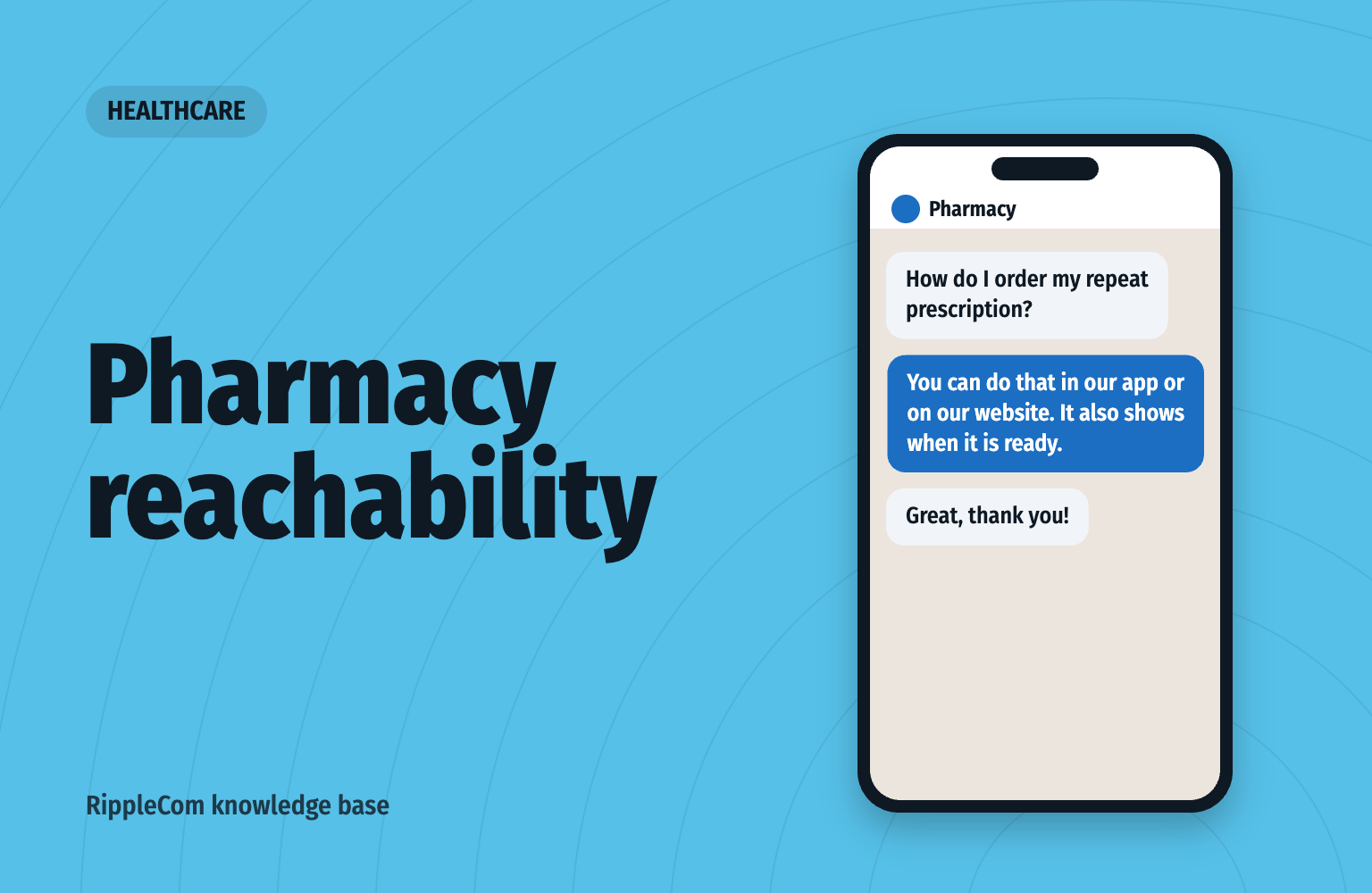
Many questions about repeat medication are the same for everyone. How do I order my repeat medication? Until what time can I order for tomorrow? When can I collect it? Where is the collection locker?
For general questions like these, the answer can be ready in advance. Then nobody has to pick up the phone to give it.
Questions about someone’s own medication are different. They need personal contact or the pharmacy’s secure environment.
For general questions, yes. For ordering medicines, no.
The WhatsApp Business Messaging Policy prohibits using WhatsApp for buying, selling or otherwise facilitating the exchange of drugs, including prescription drugs. The same policy prohibits sending or requesting health information where regulations require such information to go only through systems with heightened requirements.
A repeat prescription shows which medicine someone uses. That is health data and therefore a special category of personal data under Article 9 of the GDPR. The KNMP practice guideline (in Dutch) requires pharmacists to secure information in line with NEN 7510 and NEN 7513.
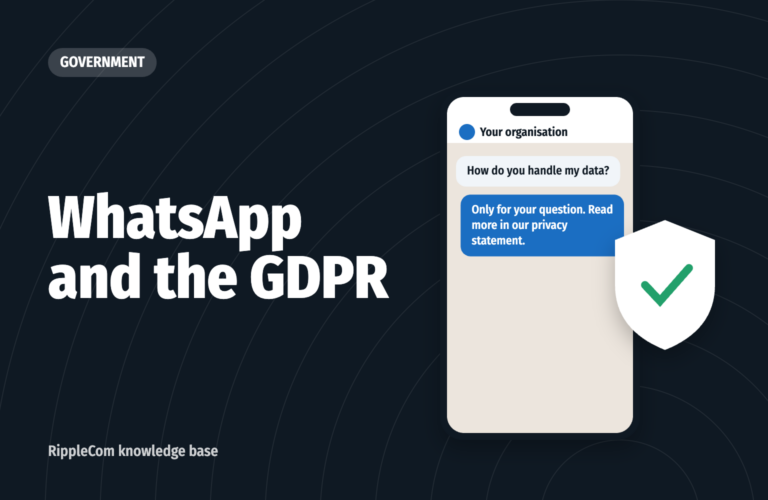
So ordering goes through the route the pharmacy already has, such as the pharmacy app or website. WhatsApp points the way to that route and answers the general questions. Read more about the rules in our article on WhatsApp and the GDPR.
Calling. A phone menu on the pharmacy’s number catches the question before anyone has to pick up. Whoever chooses repeat medication hears how ordering works and receives the link to the ordering route straight away in a message.
WhatsApp. Patients can also send a WhatsApp message to the same number. General questions about ordering, opening hours or the collection locker get an instant answer. A colleague picks up the rest in one shared overview. Do not ask for medicines or a citizen service number (BSN) in WhatsApp.
SMS. SMS is suitable for a short notification that something is ready. Do not name a medicine in such a notification.
How much this saves depends on the pharmacy. In another sector, at Autodemontage Kempenaar, incoming calls fell by 75% within two months after WhatsApp was connected to the phone system.
Every question that no longer comes in by phone gives time back to the counter. That time goes to the patient in front of you and to the questions that really need a pharmacist.
The patient gets an answer sooner, also outside opening hours. And the phone is free again for those who really need to call. Read more about calling, WhatsApp and SMS in healthcare.
No. The WhatsApp Business Messaging Policy prohibits facilitating the exchange of prescription drugs via WhatsApp. Ordering goes through the pharmacy’s secure route, such as the app or the website. WhatsApp can explain how that route works.
General questions with the same answer for everyone, such as how ordering works, the opening hours or where the collection locker is. Questions about someone’s own medication belong in a personal conversation or in the pharmacy’s secure environment.
About three quarters of Dutch pharmacists reported a shortage of pharmacy assistants in January 2025, according to Nivel. Medicine shortages cost assistants an average of 16.2 hours a week. The telephone is one of the tasks that get less attention as a result.
With a phone menu that explains how ordering works, a message with the link to the ordering route and WhatsApp for general questions on the same number. Then only the questions that really need personal contact still come in by phone.
RippleCom brings calling, WhatsApp and SMS together on the pharmacy’s existing number. Questions arrive in one shared overview and are recorded. RippleCom stores data at AWS in Frankfurt (EU). WhatsApp messages run through Meta.
Free Communication Scan
Take the free Communication Scan. 6 questions, 1 minute, your result straight to WhatsApp.
or book a 30 minute demo

We are directly and easily accessible to our customers. Our team works optimally together with RippleCom. We can help more customers with our current team, and we have saved two FTEs.


Thousands of customers. One communication standard. No missed messages. Linked with OutSmart. One inbox. Always an answer. Always traceable. RippleCom is our central control for customer contact.
This is how retail works in 2026


Customers called us 3,500 times a month about parts. Now they WhatsApp their registration and a photo of the type plate. An answer within twenty minutes. Connected to our phone system. 75% fewer calls. And messages arrive.


Reachable for my clients. Peace of mind for me. I get everything clearly organised in my email inbox. 90% of the most frequently asked question, “Can I have extra money?”, arrives separately. Either I pick it up or my colleagues do. With RippleCom I have peace and overview.


Involving residents in sustainability requires trust. That starts with accessibility. With RippleCom, we have managed to reach 20% of the residents. Fully transparent. This is how you build support.


We are active in eleven countries and serve thousands of customers. Hundreds of conversations a day. Without central control, that would be impossible. 300% higher customer satisfaction and conversion on price calculations from 4% to 37%. RippleCom scales with us.


Orthodontics is all about planning. Every appointment counts. With RippleCom, we have control over every patient contact. Reminders and changes are linked with our system. From 47 down to 12 no-shows per month. Our schedule is accurate. Our patients attend.


Our customers expect service at the highest level. That begins with communication. Direct. Personal. Reliable. Every appointment is confirmed. Every question answered. One inbox. Always an answer. That is what premium feels like.