Automatic reply in WhatsApp: how to set it up
Setting up an automatic reply in WhatsApp? How the away…
An empty chair in the waiting room. Not because there is no appointment. The patient simply did not show up. A recognisable and large problem in healthcare where the workload is already so high. In healthcare, no-show percentages vary from 4% in hospitals to as much as 15% at dentists. Every missed appointment costs money, time, and negative energy.
The patient does not show up out of ill will. On the contrary. The patient simply forgets the appointment. That’s because the reminder often comes too early. Two days before an appointment is often an ‘oh yeah’ moment and is forgotten again after that. Especially if an email is sent, it is read cursorily—amidst all the spam. The email does arrive, nothing is done with it. Some practices send an SMS. Often one day in advance. SMS does not invite dialogue. Only sending is not enough. Furthermore, this medium is hardly read anymore. Then there’s one solution left: calling. That’s where the dialogue often starts to get going. There more urgency is felt. There the patient is heard. This costs even more time and that is already scarce in healthcare.
You personally and therefore also your patient almost certainly use WhatsApp. That’s because 13.8 million Dutch people use it. We send photos, videos, and voice messages all day long. So that’s where your patient is too. That’s where the priority lies. Even though you might not want it, your patient is there. Why then would you not deploy this channel for healthcare communication?
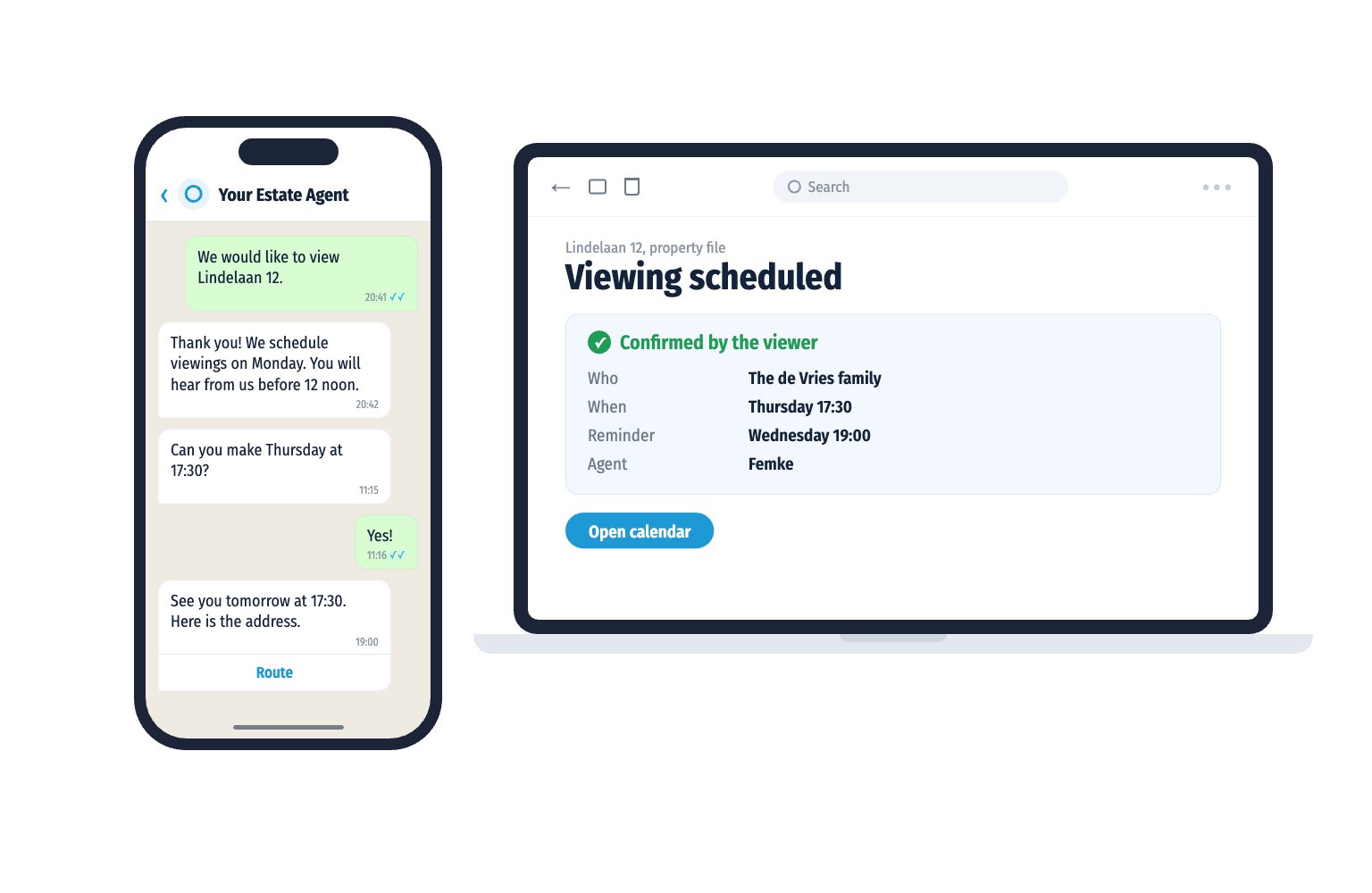
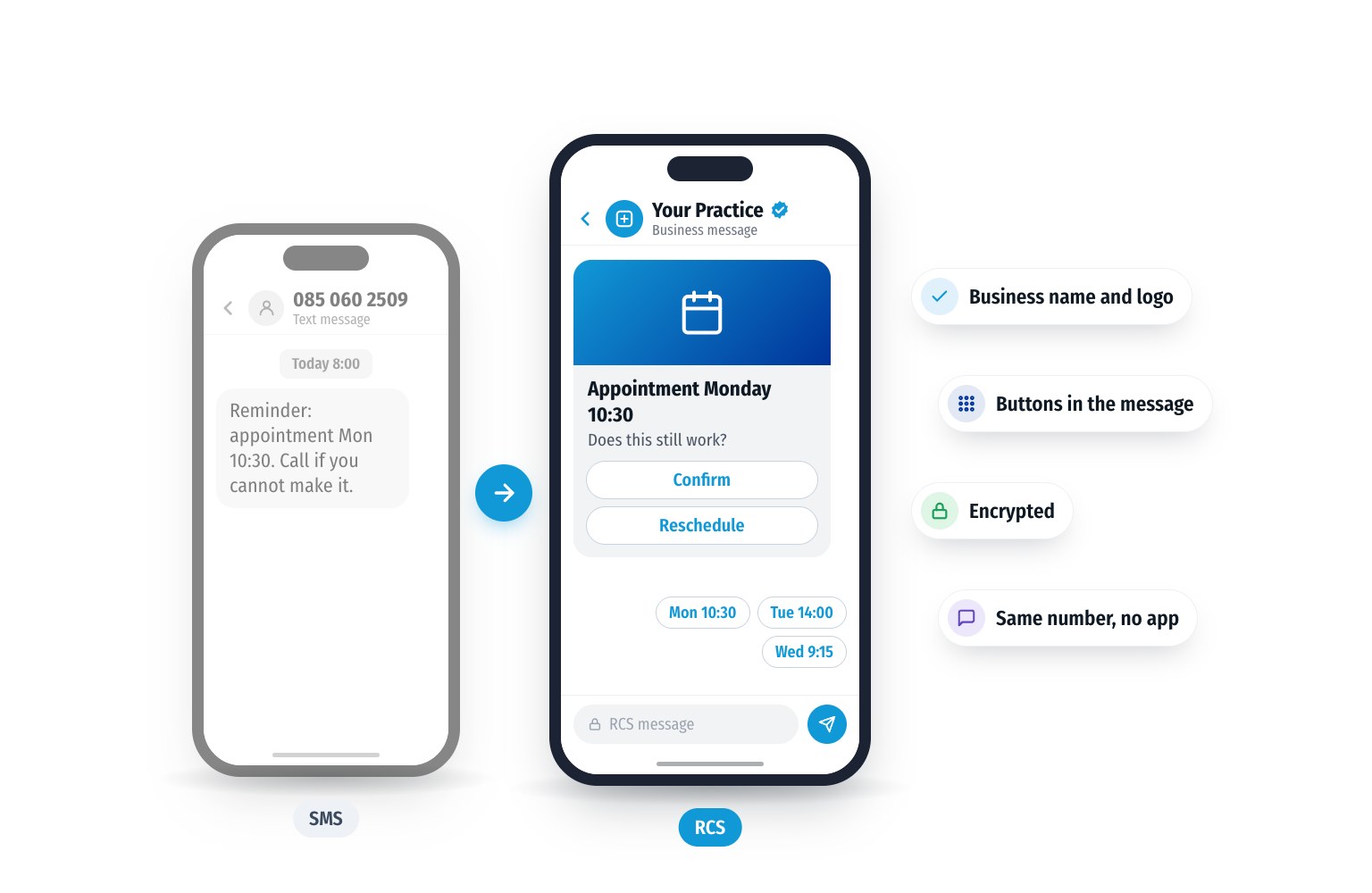
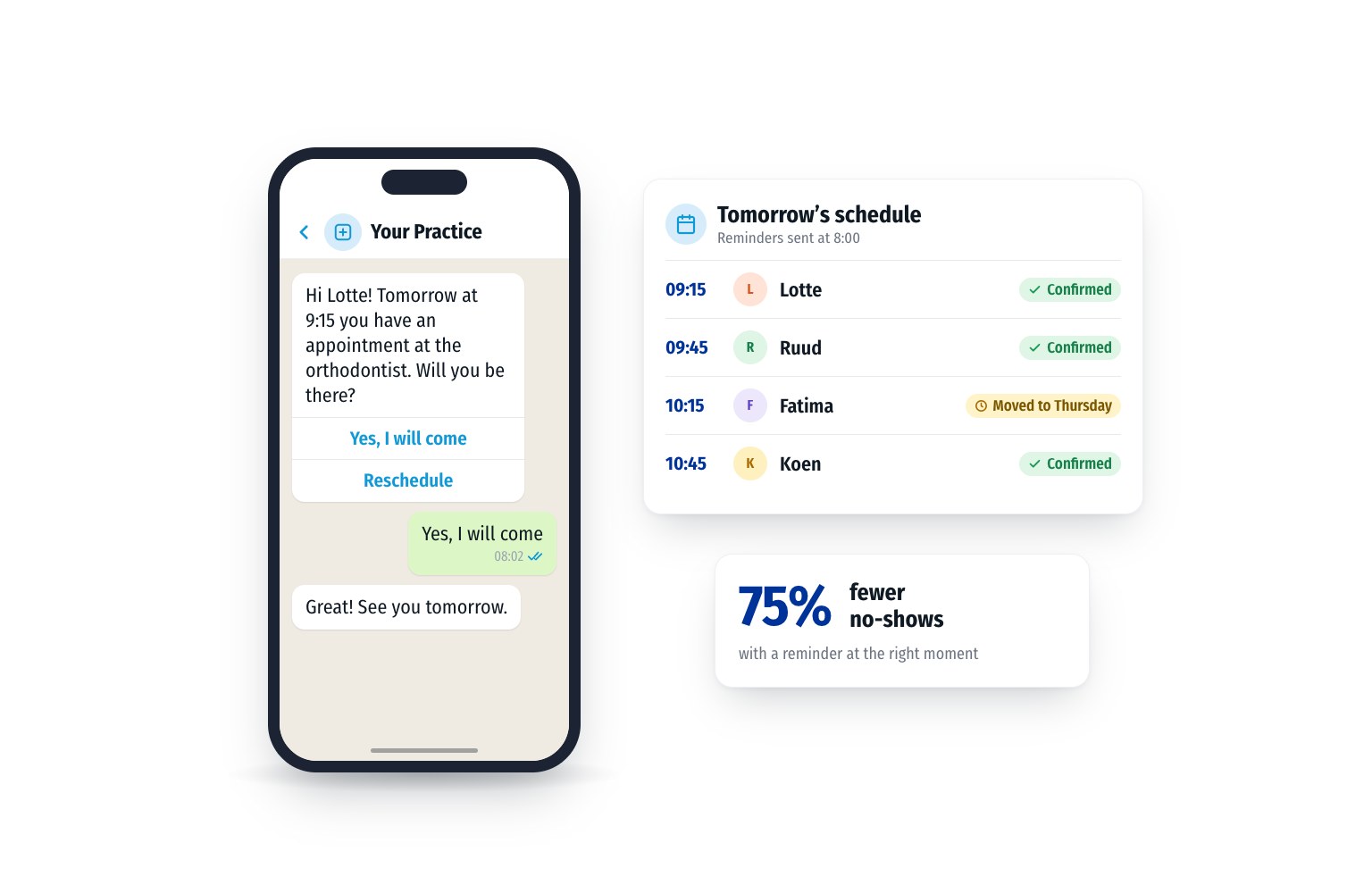
With RippleCom, on behalf of various healthcare practices, we daily send an automatic WhatsApp reminder about 75 to 90 minutes before the appointment. To make the interaction and possibility as low-threshold as possible, we send the message with this simple addition: a route button. “Hi Lisa, your appointment is later at 14:00 at Kerkstraat 12.” Then there is a button with “Route”.
By sending the WhatsApp message at the timely smart moment, there are 75% fewer no-shows. Expressed in figures, out of 100 appointments, 15 do not go through in the old situation. In the new situation, that is fewer than 4. With that, three quarters of the no-shows are a thing of the past. Without this entailing extra telephone calls or email traffic. No further actions are needed. RippleCom sends this automatically, linked with your planning. RippleCom is secure and fully within the GDPR. The result is that patients appreciate these reminders enormously. Because it feels personal and practical. Patients know where they need to be and when. No longer send a fine invoice afterwards to stimulate negativity, but remove frustration and more actions from the healthcare employees. With RippleCom, we create peace in the overfilled planning.
By facilitating communication and the dialogue where your patient already is, we ensure loyal patients young and old. After all, everyone uses WhatsApp for communication.
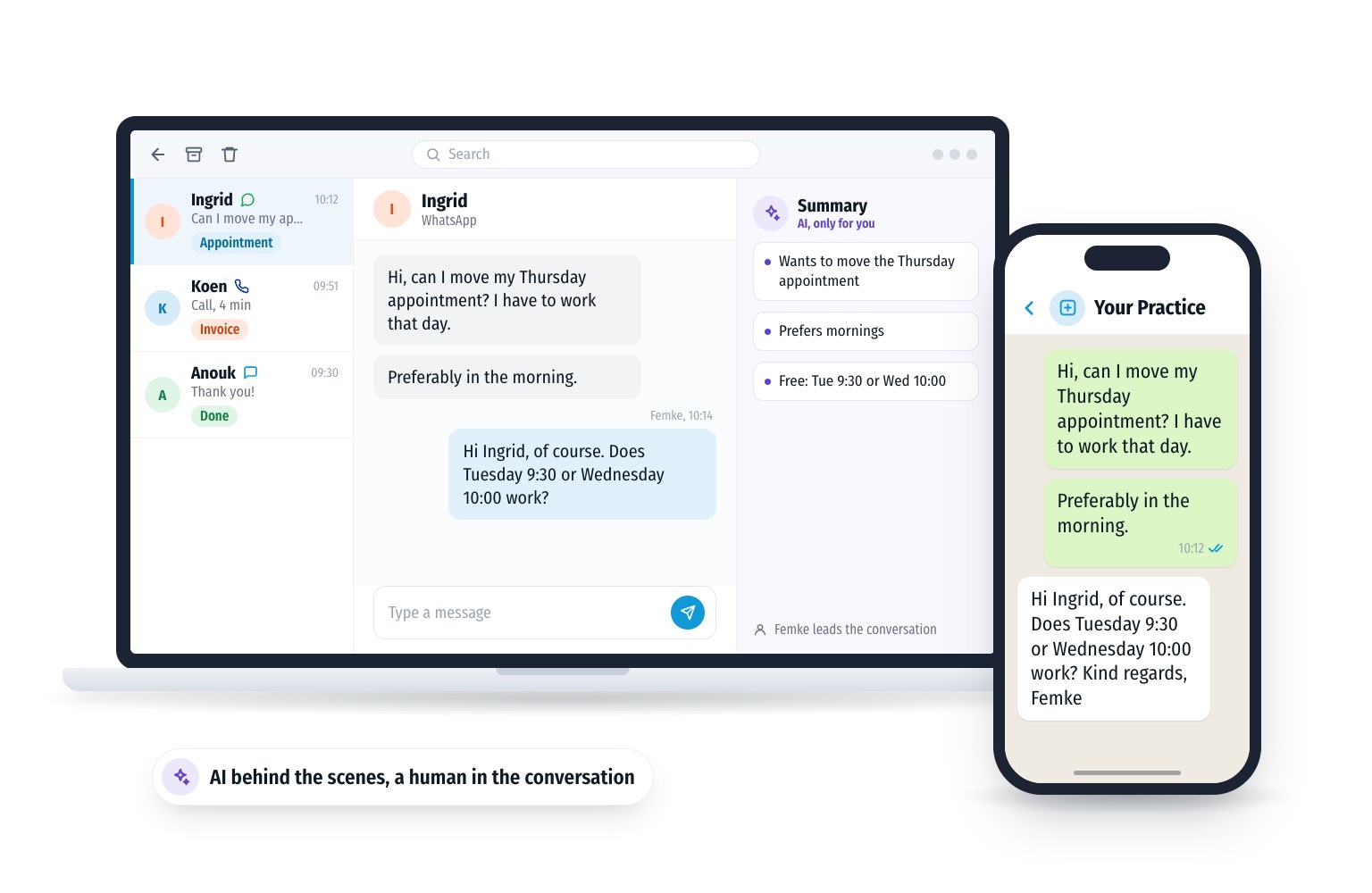
RippleCom is operational within three working days. With a short training of your healthcare employees, they are up to speed in no time. Internal communication is transparent, insightful for everyone and if there are many part-time colleagues, the communication is available. Thus we unburden the team, there is less miscommunication and there is more time for the patient. WhatsApp is intended for direct communication alongside telephony and email. Therefore it is not a replacement for existing communication but an enrichment of the current possibilities in the time of fast reporting.
Following successful examples at governments, webshops and other professionalism, shows how WhatsApp via RippleCom can bridge the participation gap. At the municipality of Deventer for Bathmen and local energy initiatives such as Aadorp (municipality of Almelo). Everywhere the core is to put the human experience central, without the business or bureaucratic communication. Thus we help healthcare further.
That varies by specialism. In hospitals the no-show rate is around 4%. At dental and orthodontic practices it rises to 15%. Every missed appointment costs treatment time, scheduling and revenue.
Usually not out of unwillingness. The patient simply forgets the appointment. Email reminders arrive too early and are skimmed. SMS is barely opened any more. Calling takes time that is not available. The reminder does not reach the patient at the right moment via the right channel.
75 to 90 minutes before the appointment. That is the moment the patient is preparing to leave. A reminder two days beforehand is an oh-yes moment that gets forgotten again. The right moment makes the difference.
That depends on the specialism. For a practice with 100 appointments per week and 15% no-shows at €75 per consultation, that amounts to over €4,500 per month in lost treatment time. Automatic reminders reduce this by 75%. That yields thousands of euros net per month.
Yes. 98% of WhatsApp messages are read, most within 20 minutes. Email disappears among spam. SMS is opened less and less. WhatsApp also offers interaction: the patient can confirm, cancel or ask a question. One-way becomes dialogue.
Yes, provided you work via the RippleCom WhatsApp with a professional team inbox. Not via the free WhatsApp Business app on a personal device. Via the API, data stays within the EU. Diagnosis or specialism information is never included in the message. Reminders are service messages for which no marketing consent is required.
Often within three working days. The connection with the scheduling system is set up, reminder templates are approved by Meta, and the team receives a short briefing. After that, reminders run automatically.
Free Communication Scan
Take the free Communication Scan. 6 questions, 1 minute, your result straight to WhatsApp.
or book a 30 minute demo